



How Contrast Therapy Boosts Athletic Performance
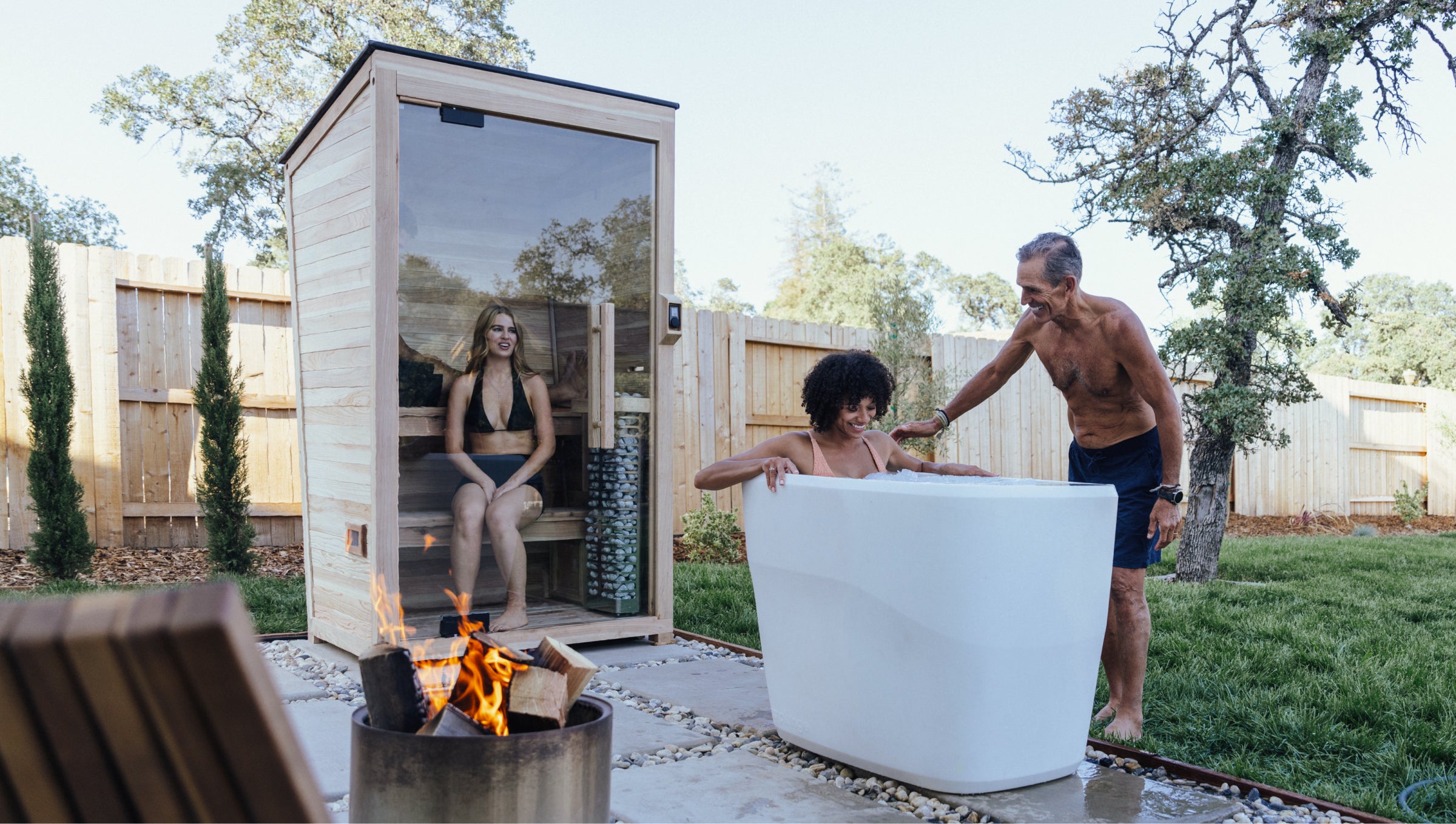
You've probably seen it on social media: athlete hops out of a sauna, hops into a cold plunge, repeat. It looks extreme. Maybe a little unhinged. But here's the thing: There's some serious science behind why the best athletes in the world are combining heat and cold to boost athletic potential.
Contrast therapy is one of the most powerful (and underrated) tools in the performance toolkit. And the data will make you rethink the relationship between "recovery" and "performance." Let's break down why.

First, Let's Talk About the Recovery Equation
Here's a stat that reframes everything: elite athletes devote roughly 17% of their waking hours to training. The other 83%? That's recovery time—and for pros, it's not passive. It's a whole discipline. Sleep, nutrition, physio, and yes, thermal therapy.
At the elite level, weekly training volume can hit 25–30 hours at peak. That kind of load demands an equally intentional recovery strategy—and the data backs up what happens when athletes skip it. Studies estimate that overtraining syndrome affects up to 60% of elite athletes over the course of a career, with side effects that include hormonal disruption, mood crashes, and elevated injury risk.
In short, recovery isn't the absence of training. It's the other half of it.
The Heat Side: What Sauna Actually Does to Your Body

Sauna has been in the wellness conversation for a while, but the performance data is still catching people off guard. Here's the standout finding from a study on middle-distance runners: athletes who added post-workout sauna sessions (about 28 minutes at 100–108°C, three times a week) for just three weeks unlocked measurable gains beyond their training alone.
The mechanism? Heat acclimation drives plasma volume expansion—your body essentially builds a bigger cardiovascular engine to cope with the stress of repeated heat exposure. It's similar to what altitude training does, but without the trip to Colorado.
There's also the heat shock protein angle: consistent sauna use can increase heat shock protein production by up to 48%, which accelerates cellular repair, supports immune function, and speeds up muscle recovery between sessions.
The Cold Side: Faster Recovery, Reduced Soreness, Better Bounce-Back

A 2023 systematic review and meta-analysis published in Sports Medicine concluded cold water immersion was equal to or better than the alternatives for recovering athletic performance after strenuous exercise. The researchers specifically noted that coaches and athletes should "strongly consider its use as part of their recovery process during competitive phases."
A separate meta-analysis pooling data from 20 studies found that cold water immersion produced significant reductions in delayed-onset muscle soreness (DOMS) and perceived exertion.
The physiology of why cold works is a two-part story. First, cold causes vasoconstriction—blood vessels narrow, reducing inflammation and slowing the delivery of inflammatory markers that can compound tissue damage. Second, when the body rewarms after immersion, vasodilation floods the muscles with freshly oxygenated blood, accelerating the clearance of metabolic waste. It's a biological pump, powered by temperature.
When You Combine Both: The Science of Contrast Therapy
Contrast therapy doesn't just stack the benefits of heat and cold—it creates a distinct physiological effect called the "vascular pump." Alternating vasodilation and vasoconstriction creates a rhythmic circulatory flush that outperforms either modality alone.
Near-infrared spectroscopy research confirmed that contrast baths increased intramuscular oxygen delivery and tissue perfusion beyond what heat or cold achieved independently. A meta-analysis in the Journal of Strength and Conditioning Research found contrast water therapy significantly reduced soreness and fatigue versus passive rest. A 2024 RCT in Scientific Reports on combat athletes found the tissue hyperemia from contrast therapy outlasted both heat-only and cold-only sessions—and only the combined stimulus produced objective reductions in muscle stiffness.

The Pros Who Swear by It
The science is strong. So is the adoption rate among elite athletes. LeBron James has built contrast therapy into his daily routine for over two decades—helping him play at the highest level into his 40s by alternating cold immersion and heat even on the road. Cristiano Ronaldo installed a personal cryotherapy chamber at home. Klay Thompson, Stephen Curry, and Draymond Green cycle through contrast protocols routinely—the current NBA standard, per Sports Illustrated, is roughly 3 minutes cold at 39–42°F alternating with 15-minute infrared sauna sessions, repeated for multiple rounds.
How to Do It Right

Protocol matters. Here's what the research supports:
Temperature: 11–15°C (52–59°F) for general cold recovery; 5–10°C for maximum neuromuscular performance. Sauna at 80–100°C for performance benefits.
Duration: 10–15 minutes cold, 15–20 minutes sauna per cycle. As little as 11 total minutes of cold per week produces measurable metabolic and neurological adaptations.
Cycles: 2–3 alternating rounds per session, 2–4 sessions per week.
Sequencing: Start with heat, end with cold. Dr. Susanna Søberg's research supports finishing cold to maximize brown fat activation and metabolic response—now known as the Søberg Principle.
The Bottom Line
Contrast therapy is a physiologically grounded protocol backed by a growing body of peer-reviewed research. Heat builds your cardiovascular engine and accelerates cellular repair. Cold controls inflammation and drives a profound neurochemical response. Together, they create a recovery effect that outperforms either alone.
The sauna-to-cold-plunge routine that looks extreme on your feed? It's one of the most evidence-backed things those athletes are doing all day.