



Can Cold Plunging Help Train Calm?
Anxiety has a way of turning ordinary moments into emergency drills. Breath gets shallow. Heart rate climbs. Your brain starts pulling fire alarms that may or may not be real.
Cold plunging is not a cure-all, and it is definitely not a personality test. But done intentionally, cold exposure gives your nervous system something useful: a controlled stressor you can enter, breathe through, and recover from on purpose.

First, Let’s Talk About Your Stress Response
When anxiety hits, your body is not being dramatic. It is doing exactly what it was built to do: mobilize. The sympathetic nervous system comes online, breathing speeds up, heart rate rises, and your body starts preparing for action — even if the “threat” is just a calendar invite with no agenda.
That response is useful when something is actually wrong. Less useful when your nervous system keeps reacting like a smoke alarm with trust issues.
The point of cold exposure is not to shut that system off. You need it. The point is to practice moving through activation without letting it take the wheel.
The Cold Side: Why the First 30 Seconds Feel So Loud

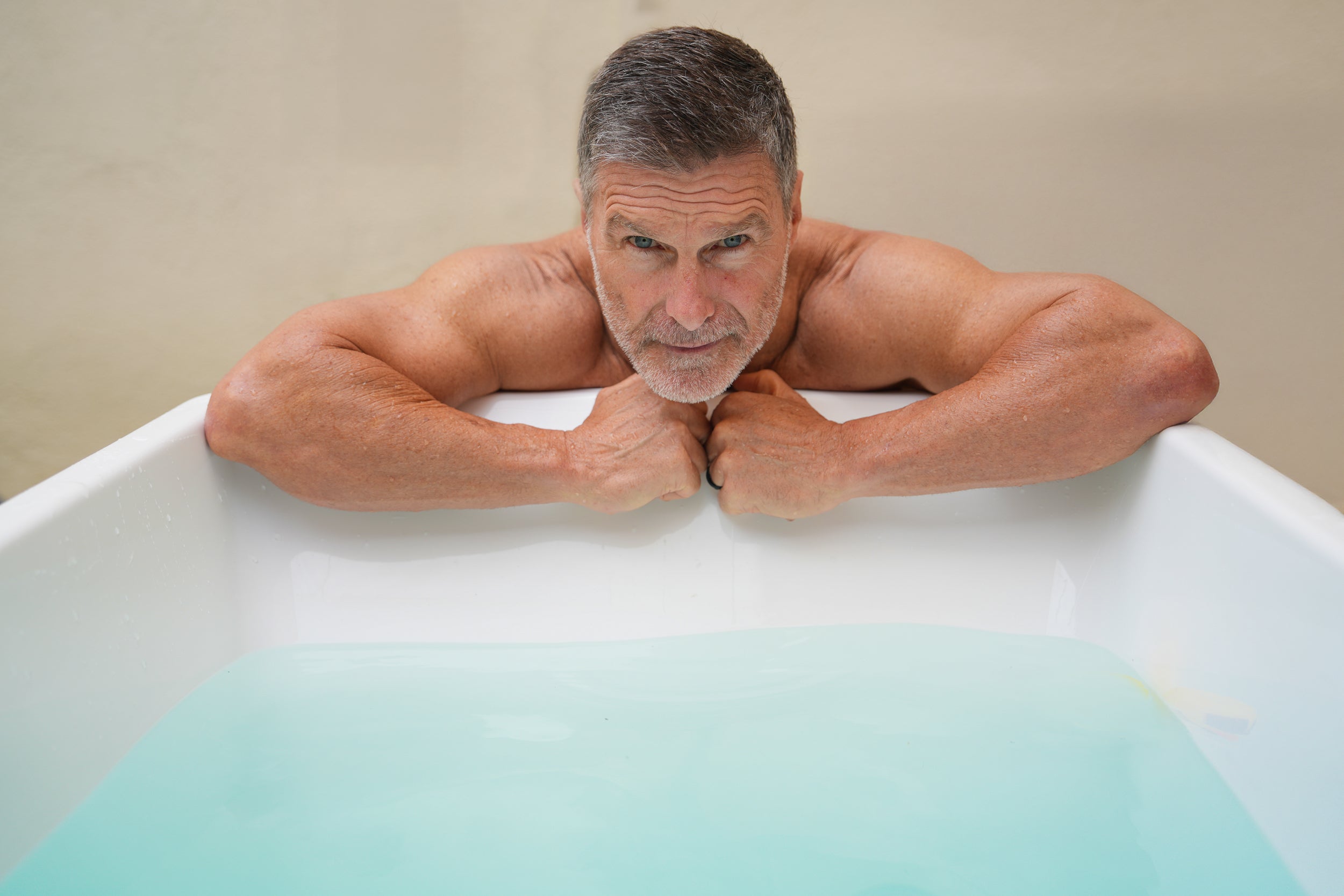
The first 30 seconds of a cold plunge are the whole lesson. Breath spikes. Muscles tense. Your brain starts negotiating like it has somewhere better to be.
That is cold shock — the acute response your body has when it meets cold water. And while it feels intense, it also gives you something rare: a clean, physical stressor with a clear beginning, middle, and end.
That distinction matters. Slow breathing during cold exposure gives your nervous system a competing signal. Instead of spiraling into panic, you give it a job: inhale, exhale, stay present, repeat.
Cold Plunging and Anxiety: What It Can Actually Train
Let’s be precise: cold plunging does not delete anxiety. No tub, sauna, supplement, or morning routine gets to make that promise.
What cold can train is your relationship to physiological stress. The sensation is intense, but controlled. You choose to enter. You choose to breathe. You choose to stay for a manageable amount of time. Then you get out and feel your system come back down.
That sequence — activation, breath, regulation, recovery — is the useful part. It is a nervous-system rep.
Over time, the payoff is not that cold water magically makes life less stressful. It is that your body gets more familiar with the feeling of stress rising and falling without turning every spike into a five-alarm event.
Recovery Is the Point

The magic is not only what happens in the water. It is what happens after.
As you exit the cold, breath slows. Heart rate settles. Your body shifts out of alarm mode. That downshift is the skill — and the more often you practice it, the easier it becomes to recognize.
That is why cold can feel mentally clean. The stressor is obvious. The response is physical. The recovery is noticeable. For people used to stress that feels abstract and everywhere, that clarity can be weirdly refreshing.
Cold Showers Are Not the Same Thing
Cold showers wake you up. Cold immersion changes the assignment.
When you submerge, more of your body is exposed to the cold stimulus at once. Getting low enough for the cold to hit your core matters. So does the face and scalp, which have powerful cold sensors involved in the body’s dive response.
Translation: if you want the full nervous-system practice, do not just dabble at the edges. Submerge with control, breathe slowly, and give your body enough exposure to actually adapt.
How to Do It Right
Temperature: Start warmer than your ego wants. You do not need to begin at 39°F. Choose a temperature cold enough to demand attention, but not so cold that you immediately lose control of your breath.
Duration: Start with 1–3 minutes. The goal is repeatable composure, not a one-time cold-water PR.
Frequency: Try 2–3 sessions per week. Like any other discipline, consistency trains adaptation better than occasional shock value.
Breath: Slow nasal inhales and longer exhales are the simplest way to downshift. If your breath is frantic the entire time, make the session warmer or shorter.
Depth: Get low enough for the cold to hit your core. If appropriate for you, brief face/head exposure can deepen the response — but keep it controlled and skip anything that feels unsafe.
Where Sauna Fits

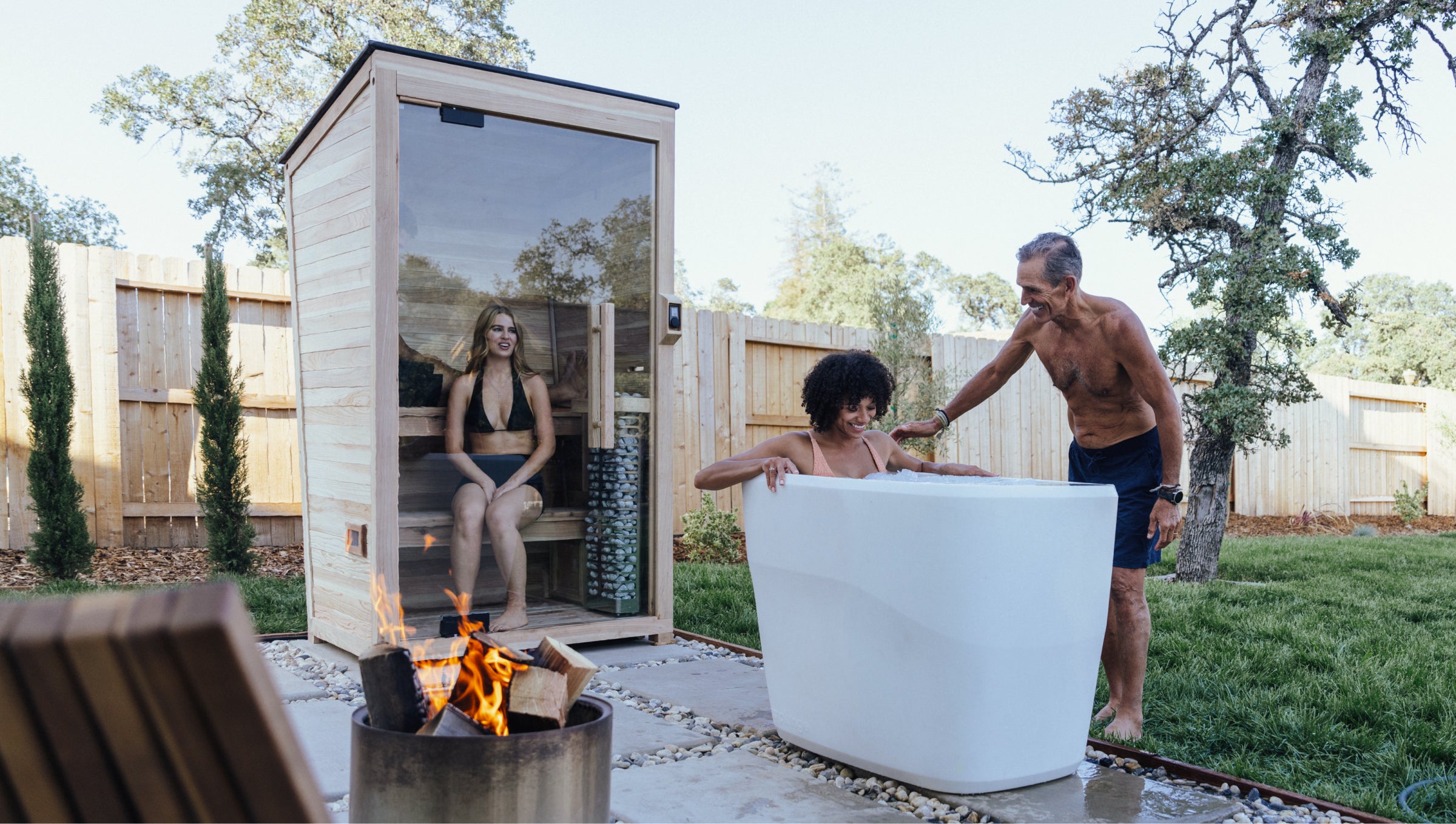
If cold is the rep, heat can be the exhale. Sauna supports relaxation, circulation, and a different kind of downshift — less sharp, more melt.
Together, hot and cold create a contrast ritual that gives your body both sides of the stress-and-recovery loop. Heat, cold, breathe, recover, repeat. Simple on paper. Weirdly powerful in practice.
The Bottom Line
Cold plunging will not remove stress from your life. Annoying, but true.
What it can do is give you a place to practice meeting stress differently. Enter the cold. Slow the breath. Stay composed. Come back down.
Do that consistently, and the win is not just that you got colder. It is that you got harder to rattle.